About the Author
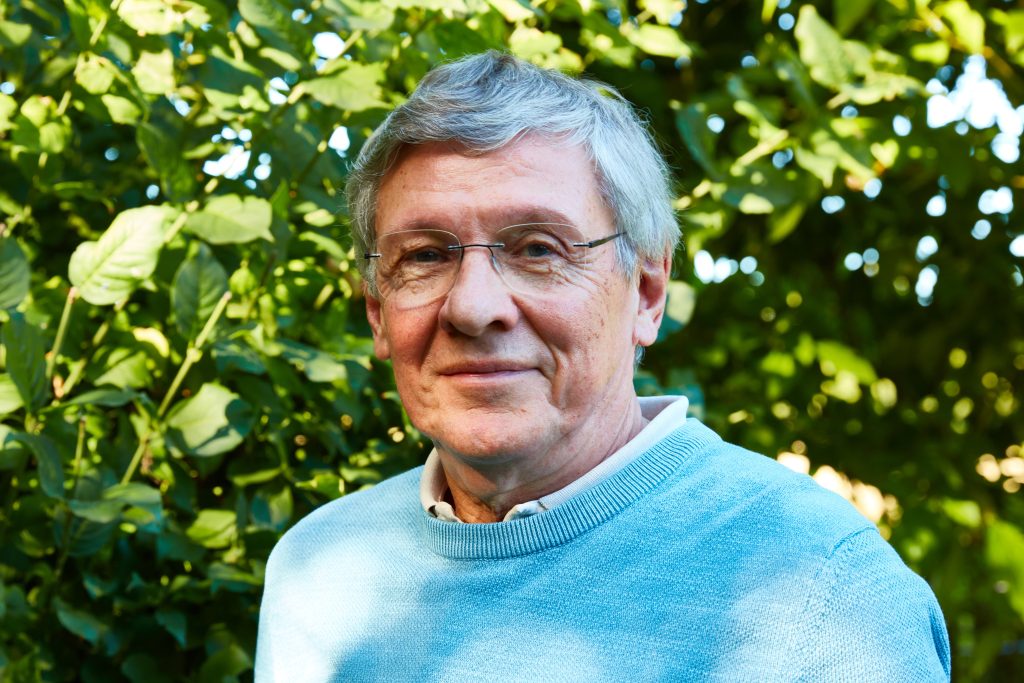
Dr. Bernhard Wessling was born in 1951 and grew up in Herne, Ruhr Region. He is a chemist and entrepreneur who has spent most of his professional career engaged in the development of chemical products and processes towards improving sustainability. For this, he conducted basic research in colloid chemistry and physics as well as non-equilibrium thermodynamics; this enabled him to achieve fundamental innovations which were successfully introduced into the world market. In addition to his primary occupation, he is a long-time investor of a large organic farm and was one of three managing directors. For decades, he has been actively involved in environmental, nature, and species conservation on a volunteer basis; for many years, he conducted behavioral research on wild cranes both nationally and internationally and made a decisive contribution to the success of a highly complex species conservation project (whooping cranes) in North America. Through these diverse activities, he gained a great deal of practical experience in the field of sustainability, which he is now placing on a universally applicable quantitative theoretical foundation.
Dr. Bernhard Wessling
Member of the Leibniz Society of Sciences, https://www.bernhard-wessling.com
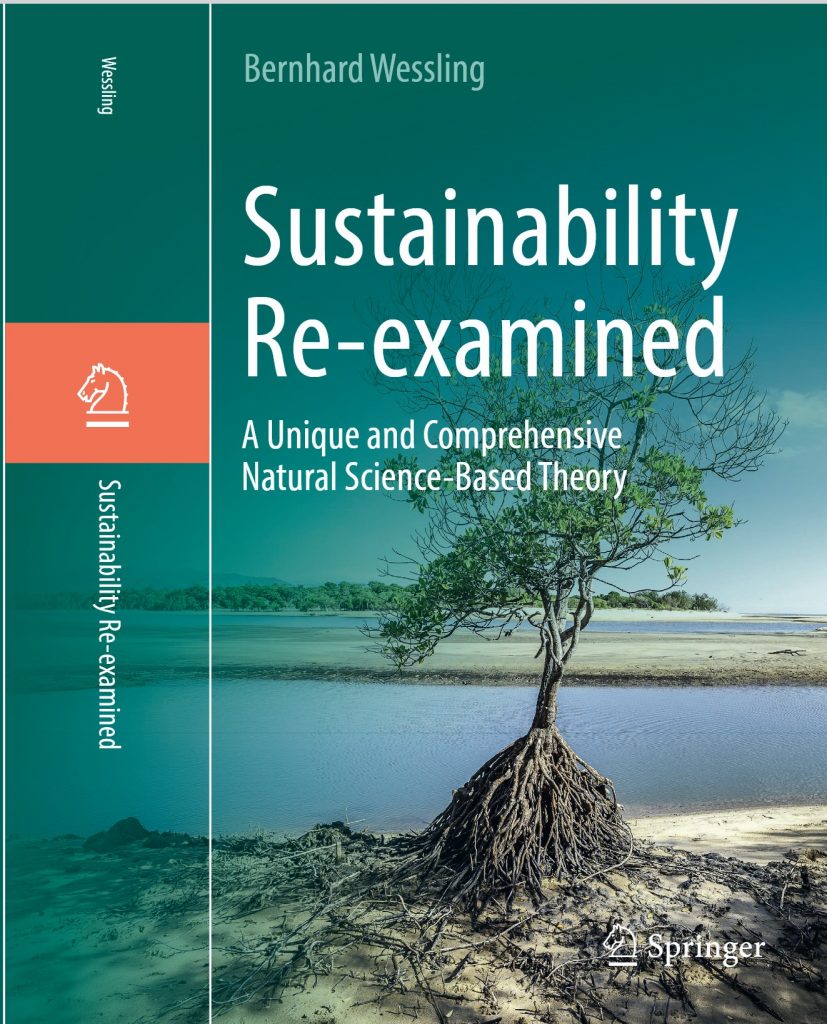
Sustainability Re-examined: A unique
and comprehensive natural science-based theory
(book announcement, scheduled for release in November/early December 2026, SpringerNature: https://link.springer.com/book/9783032408648)
To date, sustainability has been defined either purely qualitatively, in the sense of the former United Nations Brundtland Commission and the subsequently developed “Sustainable Development Goals”1, or at least partially quantitatively, using the more modern concept of “planetary boundaries”2.
In broad political and media discourse—and even more so in political and corporate marketing—“sustainability” is used in an inflationary and rather arbitrary manner; all too often, unfortunately, it is also misused and misleading. Despite all efforts using life cycle assessments and “life cycle analyses”, there has been no scientific theory of sustainability to date, nor any overarching criterion that summarizes any consumption of environmental resources and can be used to objectively measure and judge sustainability—not even through valuation in monetary terms.3
This gap is closed by the author’s new approach to assessing and measuring sustainability, which will be presented in this book: For the first time, it offers a neutral, objective, (at least semi-)quantitative, and above all falsifiable sustainability criterion that comprehensively captures the consumption of all environmental resources—the first natural scientific theory of sustainability encompassing the entirety of environmental resources.4 (In principle, this can also be expanded to include economic and social aspects.)
It becomes clear that sustainability must encompass not only the climate, but also ecosystems and biodiversity, as well as raw materials, water, and land use. The theory developed by the author since 2023 is based on the premise that entropy, in simple short words, indicates the consumption of non-renewable environmental resources of all kinds, without having to describe in detail exactly which environmental resources these are.5 This allows processes and products for a wide variety of applications to be compared with one another. Entropy is like a “price tag” that indicates: “This process or that product costs this much in environmental terms.”6 The “currency” in which we trade with the environment is entropy (in J/K). Thermodynamics is explained in everyday language in this book; anyone can understand it.
This theory has a very important application in assessing whether CO2 removal technologies are sustainable in the broadest sense, provided that their extremely high energy requirements are met from renewable sources. To date, the focus has been exclusively on the hoped-for positive climate impact, but not on potential effects on the rest of the environment (biodiversity, ecosystems, water, raw materials). “Sustainable” must be understood to mean that the application of such technologies must not cause more collateral environmental damage than the positive (climate-related) benefits it could achieve. This can be examined using entropy balances. According to the analysis, the collateral environmental damage is many times greater than the climate benefits. Should proponents of these technologies doubt the conclusions, the balance can—if necessary—be refuted based on facts grounded in the laws of nature and discussed in a scientifically objective manner.
Whether such technologies are affordable, or whether it makes sense to incur the investments and follow-up costs for them, can only be determined by a sustainability analysis based on entropy balances—and so far, such an analysis has answered this question in the negative. For ultimately, entropy quantifies, in summary, all irreplaceable losses of energy, matter, and functional complexity—for example, in ecosystems (put more simply: losses in efficiency and function; more accurately: loss of the value of energy or materials and the functionality of previously existing complex systems). According to this, DAC, CCS, and CCU are not sustainable, as will be demonstrated in the forthcoming book. Natural ecosystems can achieve the goals hoped for from DAC, CCS, and CCU in a sustainable manner, which would simultaneously strengthen biodiversity. Also this will be shown in detail in the upcoming book.
2Rockström, J., Steffen, W., Noone, K., Schellnhuber, J. et al. A safe operating space for humanity. Nature 461, 472–475 (2009). https://doi.org/10.1038/461472a, later expanded upon by Will Steffen et al., Planetary boundaries: Guiding human development on a changing planet. Science 347, 1259855 (2015). https://doi.org/10.1126/science.1259855
3A team of international authors wrote: “Although sustainable development is an agreed-upon vision for all countries, it lacks a theoretical foundation.” Obura, D., Agrawal, A., Christie, M., et al. A systems reset for sustainable development. Commun. Sustain. 1, 3 (2026). https://doi.org/10.1038/s44458-025-00009-3; Poritosh et al. attempted to establish a general sustainability criterion by quantifying ecological values in yen; however, such an assessment is subjective because it is based on a willingness to pay estimated by expert panels; https://doi.org/10.1016/j.jfoodeng. 2008.06.016, with references to Itsubo and Inada et al.
4published or put up for discussion in various media since 2024; see https://www.bernhard-wessling.com/nachhaltigkeit_und_entropie, including in *Physik in unserer Zeit*: https://onlinelibrary.wiley.com/doi/abs/10.1002/piuz.202501731 and https://www.bernhard-wessling.com/phiuz_entropie_kriterium_nachhaltigkeit
5We usually compare prices when we shop in the same way: We rarely try to figure out exactly what the specific factors are that account for price differences between two or three competing products we are interested in, whether they are apples, pants, or laptops.
6The book examines various methods, e.g.,
corrosion/corrosion protection (involving 60 million metric tons of iron per year), the replacement of a specific (particularly environmentally harmful) process in the printed circuit board industry (involving 20 million square meters of PCBs per year), is the proposed iron-based energy recycling system sustainable?, DAC, CCS, CCU, and other geoengineering methods for addressing climate change: sustainability is highly questionable;
see B. Weßling, lecture at the Leibniz Society on the latest expanded and in-depth version of the concept (and written summary of the lecture): https://www.bernhard-wessling.com/vortrag_entropie_nachhaltigkeit_ls (German)